The Lions Just Entered the Phase of Training Camp Where Mistakes Actually Matter
The Lions Just Entered the Phase of Training Camp Where Mistakes Actually Matter
There comes a point in every NFL training camp when coaches stop asking one question and start asking another.
The first question is simple:
Can this player learn our system?
The second question is much harder:
Can we trust this player when the game is on the line?
The Detroit Lions have officially reached that point.
Through the first week of training camp, practices were largely about installation. Coaches introduced concepts. Players adjusted to new terminology. Rookies learned the pace of professional football, and veterans knocked the rust off after the offseason.
Now the focus has changed.
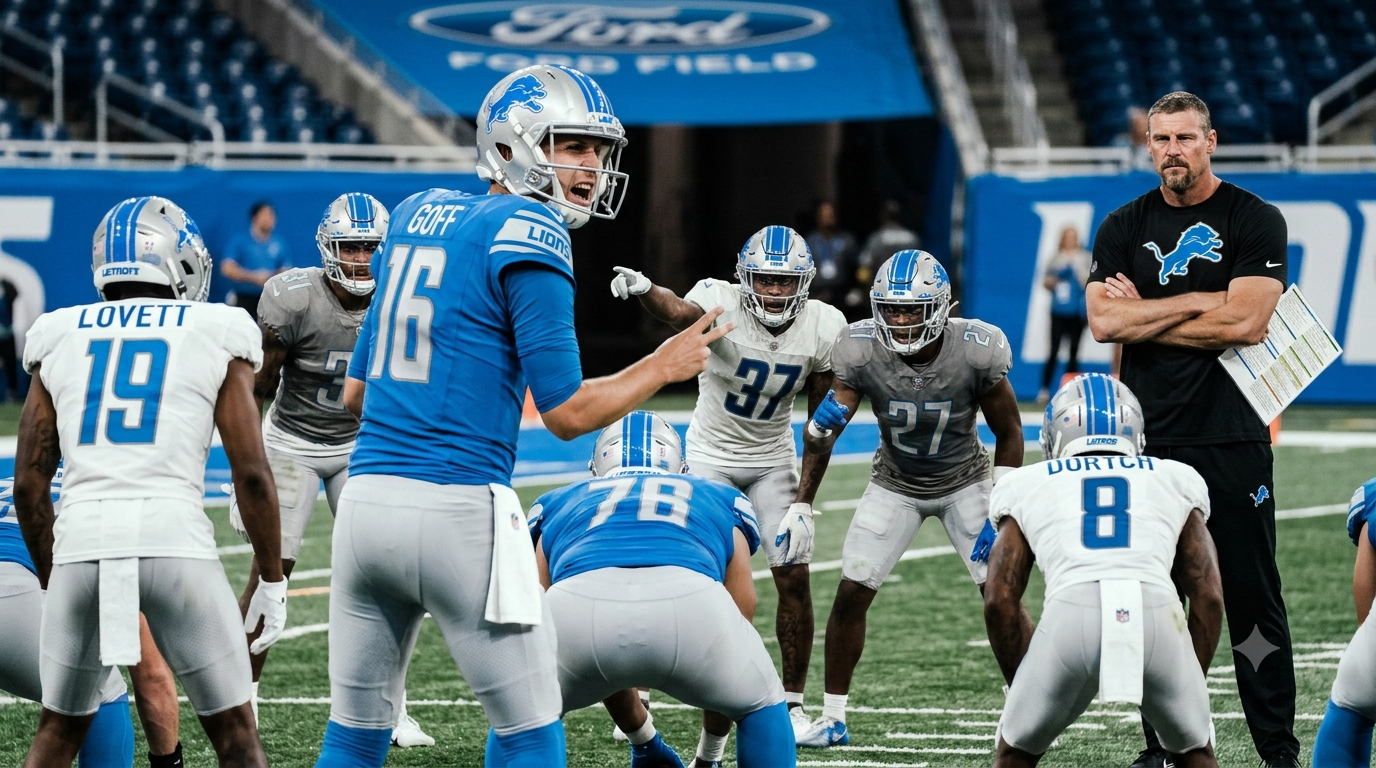
As the Lions move deeper into camp, practice periods are increasingly built around situational football—third downs, red-zone possessions, two-minute offense, backed-up situations, clock management, and the dozens of game scenarios that often decide NFL Sundays.
That’s where training camp becomes less about talent and more about trust.
It’s also where roster decisions quietly begin taking shape.
Situational Football Changes Everything
Fans naturally remember the spectacular moments.
The one-handed catch.
The interception.
The deep touchdown.
Those highlights dominate social media because they’re easy to understand.
Coaches often leave practice talking about something completely different.
Did the receiver recognize the coverage adjustment before the snap?
Did the offensive line communicate the protection correctly?
Did the linebacker align everyone before the ball was snapped?
Did the safety understand the clock, the down, and the offensive tendency?
Those moments rarely become highlight clips.
They’re also the moments that determine who stays on the field when the regular season begins.
Dan Campbell has built his coaching philosophy around the belief that championship football is won through disciplined execution long before it’s won through spectacular plays.
Situational football is where that philosophy comes alive.
The Cleaner Offense Is the Bigger Story
One of the more encouraging themes emerging from Day 6 wasn’t that the offense suddenly looked explosive.
It looked cleaner.
That distinction matters.
Explosive plays can happen because one athlete simply wins a matchup.
A clean offensive practice usually reflects something much deeper.
Quarterbacks and receivers are seeing the field the same way.
Protection calls are arriving faster.
Routes are being run with proper depth and timing.
Players are making fewer mental mistakes before the snap.
Those improvements don’t always create viral highlights.
They create sustained drives.
The Lions aren’t trying to become a team that occasionally makes spectacular plays.
They’re trying to become a team that consistently avoids drive-killing mistakes.
That’s a far more difficult goal—and a much more valuable one.
Isaac TeSlaa’s Camp Is Following a Familiar Pattern
It’s easy for rookie storylines to become exaggerated during training camp.
A spectacular catch suddenly turns into predictions of a breakout season.
A difficult practice becomes evidence that a player isn’t ready.
Reality is almost never that simple.
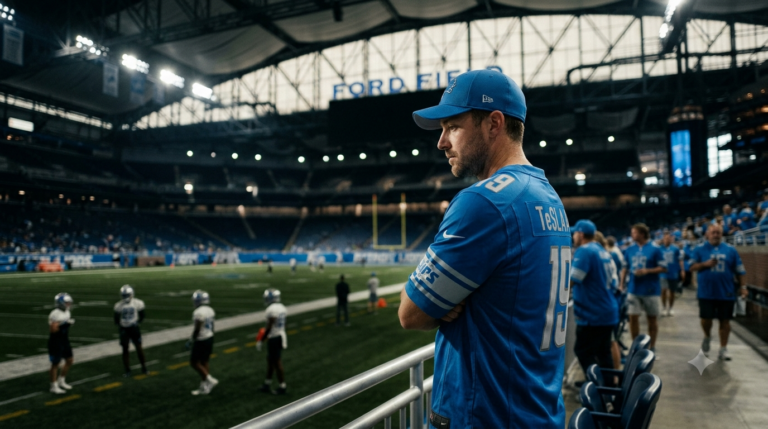
Isaac TeSlaa’s start to camp has been uneven by Dan Campbell’s own admission.
That shouldn’t surprise anyone.
Wide receiver is one of the NFL’s most demanding positions for young players.
Learning the route tree is only the beginning.
Receivers must recognize defensive leverage before the snap, adjust routes on the move, understand timing with the quarterback, contribute as blockers, and master multiple alignments across the formation.
That’s an enormous amount of information.
The real evaluation isn’t whether a rookie makes mistakes.
It’s whether those mistakes become less frequent each week.
Campbell has coached enough football to understand the difference between temporary growing pains and long-term concerns.
Training camp exists to identify which is which.
Why Dominic Lovett and Greg Dortch Keep Showing Up
While some players are working through the normal challenges of development, others are quietly making themselves impossible to ignore.
Dominic Lovett continues stacking productive practices.
Greg Dortch keeps finding ways to contribute both offensively and on special teams.
Neither player is dominating headlines.
Both are doing something coaches value even more.
They’re creating trust.
Consistency has a way of forcing difficult conversations inside meeting rooms.
Every reliable practice raises another question.
Can this player handle a bigger role?
Does he deserve more first-team reps?
Has he earned another opportunity in situational periods?
Those are exactly the questions Detroit wants its coaching staff to ask.
Competition isn’t about proving one player belongs.
It’s about making every roster decision harder.
This Is the Stage Dan Campbell Loves Most
Anyone can look impressive when practice is controlled.
The best NFL players separate themselves when practice becomes unpredictable.
That’s why Campbell has always embraced this stage of training camp.
Situational football introduces pressure.
Players must think faster.
Communicate more effectively.
Recover from mistakes without allowing one bad rep to become two.
That’s where confidence is built.
It’s also where trust begins to replace projection.
By the time preseason games arrive, many of the coaching staff’s biggest evaluations will already be underway.
The Lions aren’t simply watching who makes the flashiest plays.
They’re discovering who consistently makes the right ones.
Trust Is Built One Situation at a Time
The NFL doesn’t hand out trust because of talent.
It earns trust because of consistency.
That’s what makes this stage of training camp so important.
A receiver might make three spectacular catches during individual drills.
Then line up incorrectly in a two-minute drill.
Guess which play the coaching staff remembers.
A linebacker might dominate against the run all afternoon.
Then lose track of his assignment on third-and-long.
That’s the rep that gets discussed in the meeting room.
Situational football has a way of exposing every small detail.
That’s why coaches value it so highly.
Physical ability gets players into the NFL.
Decision-making keeps them on the field.
Cleaner Doesn’t Mean Perfect
One of the more encouraging themes from Day 6 was the offense looking noticeably cleaner as the Lions shifted into more situational work.
Some fans hear the word “cleaner” and immediately think the offense is ready.
That’s not really the point.
Training camp isn’t designed to produce perfection.
It’s designed to produce progress.
The mistakes become smaller.
Communication becomes faster.
Adjustments become automatic.
Quarterbacks and receivers begin seeing the field through the same lens.
Offensive linemen recognize defensive fronts before the snap instead of after it.
That’s what coaches want to see.
Not flawless football.
Improving football.
Campbell understands that championship teams aren’t built because they avoid mistakes.
They’re built because they stop repeating them.
Every Practice Creates a New Opportunity
One reason training camp is so valuable is that yesterday’s mistakes don’t automatically become tomorrow’s problems.
Players receive another chance.
Another rep.
Another situation.
That’s where growth happens.
Isaac TeSlaa’s early camp hasn’t been perfect.
Campbell acknowledged as much.
But imperfect beginnings rarely determine NFL careers.
Young players often experience information overload during their first training camp.
New terminology.
Faster competition.
Greater expectations.
The question isn’t whether mistakes happen.
The question is how quickly they disappear.
That’s the evaluation taking place every afternoon.
Dominic Lovett and Greg Dortch Understand the Assignment
While some players are learning how to survive camp, others are taking advantage of every opportunity.
Dominic Lovett continues making a legitimate push for a roster spot.
Greg Dortch has found ways to contribute both offensively and on special teams.
Neither storyline is accidental.
Roster battles rarely belong to the most naturally gifted athlete.
They belong to the player coaches trust in the greatest number of situations.
Can he execute the route correctly?
Can he contribute on special teams?
Can he understand multiple offensive packages?
Can he avoid mental mistakes when the pressure increases?
Versatility has become one of the defining characteristics of Brad Holmes’ roster-building philosophy.
The more jobs a player can perform, the harder he becomes to replace.
That’s why players like Lovett and Dortch continue drawing attention.
They’re proving useful in more than one way.
Brad Holmes Built Competition for Moments Like This
One of the biggest differences between today’s Lions and the team Dan Campbell inherited is the quality of competition throughout the roster.
Early in the rebuild, some starting jobs felt inevitable.
Today, very little feels guaranteed.
That’s exactly what Brad Holmes wanted.
Competition forces improvement.
Veterans can’t relax.
Rookies can’t assume development alone earns them a place.
Every practice becomes another interview.
We’ve already explored why Holmes consistently builds depth before it becomes necessary.
Read More:
Why the Devin White Signing Tells Us More About Brad Holmes Than Devin White
Training camp is where that philosophy becomes visible.
Not because coaches say it.
Because players live it.
The Teams That Handle Pressure Best Usually Win in January
Situational football isn’t really about August.
It’s preparation for moments months away.
Third-and-goal late in the fourth quarter.
Two-minute offense needing a field goal.
Protecting a one-score lead.
Managing the clock with two timeouts remaining.
Those moments don’t suddenly become easier because the playoffs arrive.
They’re easier because players practiced them repeatedly long before anyone was watching.
That’s why Campbell insists on creating pressure during camp.
Not to make practice harder.
To make games feel more familiar.
Preparation reduces panic.
Trust reduces hesitation.
Execution follows both.
Final Thoughts
Training camp always creates headlines.
One spectacular catch.
One impressive interception.
One exciting rookie.
Those moments deserve attention.
But they’re rarely the most important stories unfolding inside Allen Park.
The real story is trust.
Who communicates when the play changes?
Who handles pressure without making mental mistakes?
Who earns another opportunity because coaches know exactly what they’ll get?
That’s where the Lions find themselves now.
The installation phase is over.
The evaluation phase is evolving.
This is the stage where football becomes less about learning plays and more about proving you can execute them when every situation becomes more complicated.
Dan Campbell has often said that championship football is built through discipline, consistency, and accountability.
Day 6 of training camp showed exactly what he meant.
Because once situational football begins, talent still matters.
But trust starts mattering even more.
And by the time September arrives, that trust may prove to be one of the biggest differences between making plays and making winning plays.
What Do You Think?
As the Lions move deeper into training camp, which quality do you think coaches value most when deciding who earns meaningful snaps: athletic talent, versatility, football intelligence, or consistency under pressure?
Share your thoughts in the comments below. We’d love to hear which player you think is earning the most trust as camp continues.