Why Culture Became the Lions’ Competitive Advantage
The First Thing Detroit Fixed Wasn’t Talent
When Dan Campbell took over the Detroit Lions, the conversation around the team centered on talent deficiencies.
The roster needed improvement.
The defense lacked playmakers.
The offense needed stability.
But inside the building, Campbell and Brad Holmes understood something deeper.
Detroit didn’t just need better players.
Detroit needed a different environment for players to succeed in.
Culture was the first piece of the rebuild.
And unlike many teams that talk about culture as a marketing phrase, the Lions began embedding it into every football decision the organization made.
Today, that cultural framework has quietly become one of Detroit’s biggest competitive advantages. Brad Holmes roster philosophy
Culture in the NFL Is Often Misunderstood
Across the league, “culture” is one of the most overused words in sports.
Coaches mention it in press conferences.
Executives highlight it in interviews.
Teams claim they are “building culture” during rebuilding phases.
But the reality is that culture rarely survives adversity.
When losing seasons arrive, culture often dissolves into frustration, blame, and roster turnover.
The Detroit Lions chose a different path.
Campbell defined culture not as motivation, but as behavior under pressure.
The Lions’ culture would be measured by how players reacted when games went wrong.
Not when everything went right. Detroit’s draft strategy
Dan Campbell’s Cultural Blueprint
Dan Campbell’s leadership style is unconventional by NFL standards.
He is emotional in press conferences.
Direct in meetings.
Unapologetically physical in his vision for football.
But underneath that intensity sits a clear philosophy:
Players perform better when they know exactly who they are expected to be.
Campbell created a locker room environment centered around several core principles:
Accountability
Resilience
Preparation
Physicality
None of those principles rely on talent alone.
They rely on habits.
Players who embrace those habits fit Detroit.
Players who resist them tend to disappear quickly.
That clarity simplifies roster construction.
Culture as a Personnel Filter
One of the most fascinating aspects of Detroit’s rebuild is how culture has influenced the draft.
Brad Holmes does not simply scout physical traits.
He scouts behavioral traits.
How players respond to adversity.
How they interact with teammates.
How they approach preparation.
Those details matter because culture can collapse if the wrong personalities enter the locker room.
This is why certain Lions draft selections surprised analysts.
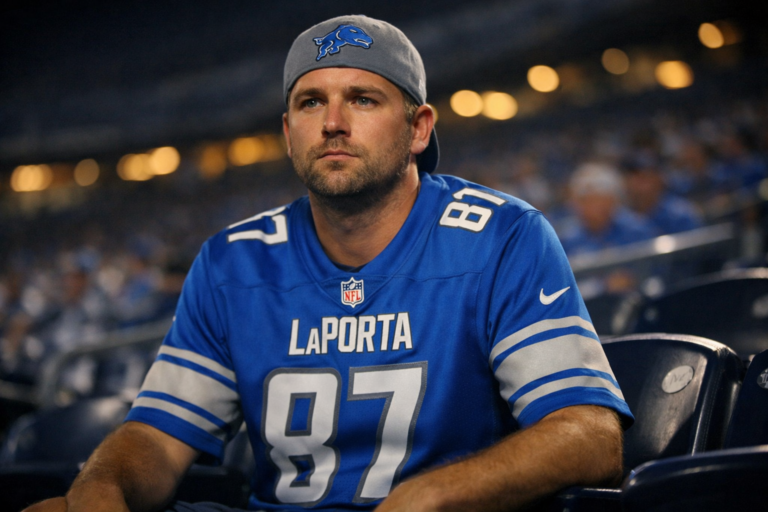
Players like Amon-Ra St. Brown, Sam LaPorta, and Brian Branch were not just talented.
They were relentless workers.
That alignment between personality and philosophy allows Detroit to sustain its identity. Detroit’s contender window
Why Culture Accelerates Player Development
Another benefit of a strong locker room culture is developmental speed.
Young players often struggle in environments where expectations are unclear.
Veterans may protect their roles.
Coaches may hesitate to trust rookies.
In Detroit, the opposite dynamic exists.
Young players are expected to contribute quickly — but they are also supported by veterans who reinforce the team’s values.
That mentorship accelerates growth.
Instead of competing against teammates for relevance, players compete against the standard the organization sets.
That difference can shave years off a rebuild.
Culture Creates Stability
The NFL is built on constant turnover.
Free agency reshapes rosters.
Coaching staffs change annually.
Salary cap pressures force difficult decisions.
Teams that rely solely on talent often struggle to survive those disruptions.
Detroit’s culture helps absorb them.
When players leave, the expectation system remains intact.
New players enter an environment where behaviors are already defined.
This stability is one reason the Lions have been able to maintain continuity while still improving the roster.
Culture Protects the Locker Room From External Noise
Success attracts attention.
Attention attracts criticism.
Detroit’s recent rise has brought a new wave of national coverage, speculation, and debate.
But culture can act as insulation.
When players trust the environment around them, external narratives lose influence.
The locker room remains focused on internal standards rather than media cycles.
That psychological stability becomes particularly important late in the season, when pressure intensifies.
Why Culture Matters Most in January
Regular season football rewards talent.
Playoff football rewards discipline.
In January, the margins between teams shrink.
Mistakes become decisive.
Teams that remain emotionally steady under pressure often outperform more talented opponents.
Detroit’s cultural framework was designed with that reality in mind.
Campbell’s emphasis on resilience prepares players for the volatility of playoff football.
That preparation may ultimately determine whether Detroit’s competitive window leads to championships.
Culture as a Competitive Advantage
In sports analytics, advantages are often measured in physical metrics:
Speed
Strength
Production
But psychological and organizational advantages are harder to quantify.
Detroit’s culture is one of those invisible advantages.
Players trust the system.
Coaches reinforce consistent expectations.
The front office drafts personalities that fit the structure.
Together, those elements create an environment where success becomes sustainable.
Not accidental.
Final Thought
Every NFL team claims culture matters.
Few organizations build their entire strategy around it.
The Detroit Lions have.
And in a league defined by constant volatility, that cultural foundation may prove to be the franchise’s most valuable asset.