The Lions Just Entered the Most Important Phase of Training Camp
The Lions Just Entered the Most Important Phase of Training Camp
Training camp highlights can fool you.
A receiver makes a spectacular catch.
A defensive back grabs an interception.
A quarterback threads a pass between two defenders.
Those moments matter. They tell us something about talent, timing, confidence, and development.
But eventually, Dan Campbell needs answers that highlights can’t provide.
Can you move another grown man against his will?
Can you hold your ground when someone is trying to move you?
Can you make the right decision when the rep becomes physical, the pocket gets crowded, and the play doesn’t unfold exactly the way it did on the whiteboard?
Can you still execute when you’re tired?
Can the coaches trust you when football starts feeling like football again?
That’s where the Detroit Lions are now.
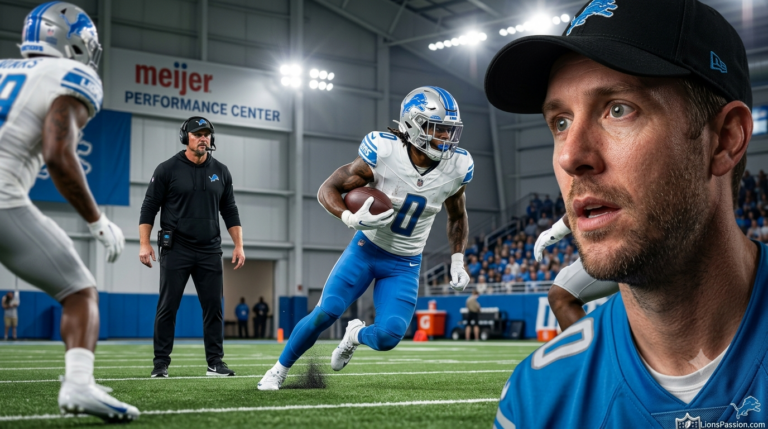
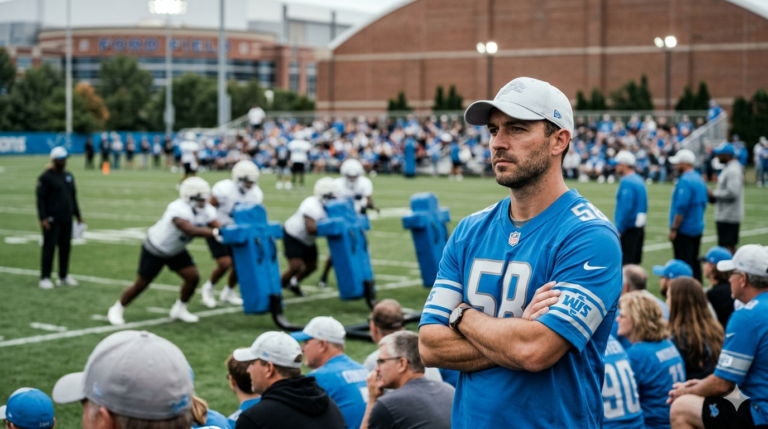
The pads are on.
The physicality is increasing.
Roster battles are becoming harder to fake.
And the most important phase of Detroit’s 2026 training camp has officially begun.
Because the first few days of camp can show coaches who looks good.
This part starts showing them who can actually help win football games.
The Pads Change the Evaluation
There’s a reason coaches constantly warn against making too much of early training camp.
Football without full contact can distort reality.
Speed shows up.
Athleticism shows up.
Route running shows up.
Quarterbacks and receivers can develop rhythm.
Defensive backs can demonstrate instincts and coverage ability.
But certain parts of the game simply cannot be properly evaluated until the physical element returns.
Offensive linemen need resistance.
Defensive linemen need contact.
Linebackers need traffic.
Running backs need congested running lanes.
Tight ends need to prove they can function when blocking assignments become real.
Receivers need to show they can maintain timing and concentration when defenders become more aggressive at the line of scrimmage.
That’s why padded practices matter so much.
They begin removing some of the projection from player evaluation.
Coaches no longer have to imagine what a player might look like when the intensity rises.
They get to see it.
And for a Lions team with legitimate competition throughout the roster, that distinction matters.
Dan Campbell Has Been Waiting for This
Nobody should be surprised that this stage of camp carries extra significance under Dan Campbell.
His entire football identity is built around physicality.
Not reckless physicality.
Functional physicality.
Campbell wants an offense capable of controlling the line of scrimmage.
He wants defenders who can tackle.
He wants receivers willing to block.
He wants tight ends capable of doing more than catching passes.
He wants players who can execute when the game becomes uncomfortable.
That’s why Detroit’s first padded practices shouldn’t be viewed as another checkpoint on the training camp calendar.
They’re an evaluation tool.
Campbell can finally begin asking one of the questions that matters most:
Does the player we’ve been watching without pads still look like the same player once contact becomes part of the equation?
For some players, the answer will be yes.
For others, this is where training camp gets complicated.
This Is Where Roster Battles Become Real
Every summer produces training camp stars.
Some become legitimate NFL contributors.
Others disappear once preseason games begin.
Why?
Because there’s a difference between looking good in practice and functioning inside the realities of an NFL game.
That’s especially important for players fighting for the bottom third of Detroit’s roster.
Those players aren’t simply competing for touches.
They’re competing for jobs.
And many of those jobs will be decided by details most fans never see in a highlight package.
Can a backup linebacker defeat a block?
Can a reserve defensive lineman maintain his gap?
Can a receiver contribute on special teams?
Can a tight end block well enough to remain on the field when Detroit runs the football?
Can an offensive lineman recover after losing the first half-second of a rep?
Those things become much easier to evaluate once the pads come on.
Suddenly, the depth chart starts becoming less theoretical.
Detroit Needs the Physical Identity Back
There’s another reason this stage matters more for the Lions than it might for some teams.
Detroit has a standard to reclaim.
The Lions have built much of their identity under Campbell around controlling games physically.
When Detroit’s offense is functioning at its best, the offensive line isn’t simply protecting the quarterback.
It’s dictating terms.
The running game forces defenses to react.
Play-action becomes more dangerous.
Jared Goff gets cleaner opportunities.
The entire offense begins working off the pressure created up front.
But after a season in which the offensive line didn’t always consistently reach the standard Detroit expects, Campbell has made it clear that he wants that edge back.
The word that keeps fitting is simple:
Bully.
Not because Detroit needs cheap shots or unnecessary aggression.
Because Campbell wants his offensive line imposing its will again.
That can’t be evaluated during walkthroughs.
It can’t be established through seven-on-seven work.
It has to be built through physical reps.
And training camp is where that process begins.
Alim McNeill’s Return Makes the Competition Better
The timing of Alim McNeill’s return also matters.
Getting an important defensive lineman back isn’t simply good injury news.
It improves the quality of Detroit’s practices.
Iron sharpens iron gets repeated so often in football that it almost becomes cliché.
But there’s truth behind it.
An offensive line becomes more prepared when it’s practicing against legitimate NFL defensive talent.
Defensive linemen improve when they’re fighting through quality protection.
Running backs learn more when holes close faster.
Quarterbacks learn more when the pocket doesn’t remain perfectly clean.
McNeill’s presence raises the difficulty.
That’s exactly what Detroit needs.
Training camp shouldn’t always look pretty.
In fact, some of the most valuable practices probably won’t.
The Devin White Signing Fits This Phase Perfectly
Detroit’s decision to add veteran linebacker Devin White becomes even more interesting when viewed through this lens.
The Lions aren’t simply collecting names.
They’re increasing competition.
Jimmy Rolder’s injury created uncertainty in the linebacker room, but Detroit didn’t respond by lowering expectations.
It added another experienced option.
Now younger players have another veteran to compete against.
Veterans have another player challenging for snaps.
Coaches have another option to evaluate.
That’s what deep teams do.
They don’t wait until a weakness becomes obvious in September.
They create competition in August.
And padded practices are where that competition becomes much easier to judge.
Jimmy Rolder’s Situation Shows Why Development Still Matters
Rolder’s injury could have easily turned his rookie training camp into a lost opportunity.
The Lions don’t appear to view it that way.
Detroit’s coaching staff still expects him to contribute.
That’s important.
Because training camp isn’t only about deciding who starts Week 1.
It’s about preparing an entire roster for what happens over a 17-game season.
Players get injured.
Roles change.
Depth charts move.
Young players who aren’t ready in September may become essential in November.
That’s why development doesn’t stop simply because someone temporarily falls behind.
Campbell needs immediate contributors.
But Holmes also needs long-term ones.
A healthy organization has to develop both at the same time.
This Is Where Brad Holmes Gets His Answers
Brad Holmes has already done most of his work.
He drafted the players.
Signed the free agents.
Added veteran insurance.
Built competition throughout the roster.
Now comes the evaluation.
Was Detroit right about the young players expected to take larger roles?
Can the rookies handle NFL physicality?
Which veterans still have enough to contribute?
Which under-the-radar players are forcing themselves into the conversation?
And perhaps most importantly:
Where is the roster still vulnerable?
Those answers don’t come from reputation.
They come from reps.
The first week of training camp gives Holmes information.
The padded portion gives him evidence.
And those two things aren’t always the same.
The Depth Chart Is About to Start Moving
This is also the point where early assumptions begin getting challenged.
Some players entered camp penciled into roles because of what they did last season.
Others arrived with expectations because of draft position.
Some veterans entered with experience on their side.
None of that disappears.
But the weight of actual performance begins increasing every day.
That’s what makes this stage fascinating.
A rookie can force himself into the rotation.
A backup can become difficult to ignore.
A veteran can suddenly find himself defending snaps that once appeared secure.
An overlooked player can turn a roster battle upside down.
And that’s exactly what Detroit should want.
Because if the Lions are serious about competing deep into January, the goal of training camp isn’t protecting the depth chart everyone expected in July.
It’s discovering the best 53 players they can take into September.
The pads are finally giving them a much better way to find out who those players are.
This Is Where the 53-Man Roster Starts Taking Shape
Fans often think roster decisions happen after the preseason.
The truth is, many of them begin right here.
Once the pads come on, coaches stop imagining what a player might become and start evaluating what he consistently is.
Can he finish blocks?
Can he shed them?
Can he communicate under pressure?
Can he tackle in space?
Can he maintain technique when fatigue sets in?
Those answers don’t come from highlight reels.
They come from repetition.
The next two weeks will produce hundreds of those evaluations.
Some players will quietly climb the depth chart without ever making a spectacular play.
Others will discover that looking good in shorts doesn’t always translate when football becomes physical.
That’s why this stretch of camp is so valuable.
It removes uncertainty.
The Hidden Competitions Matter Most
Most fans naturally focus on the starting lineup.
Who wins the WR3 job?
Who starts at cornerback?
Who lines up next to Aidan Hutchinson?
Those battles deserve attention.
But the coaching staff spends just as much time evaluating another group entirely.
Who becomes the fourth linebacker?
The fifth defensive tackle?
The sixth corner?
The backup offensive guard who may only play because of an injury in November?
Those aren’t glamorous jobs.
They’re often season-saving jobs.
The Lions have spent the past several years building depth precisely because Campbell and Brad Holmes understand that championships are rarely won by the first 22 players alone.
They’re won by the players who are ready when circumstances force them onto the field.
We’ve already seen signs of that philosophy throughout this camp.
Veteran additions.
Young players earning larger roles.
Competition at nearly every position.
That’s not coincidence.
That’s planning.
Physical Football Reveals Mental Toughness
Pads don’t simply make football more physical.
They make it more honest.
It’s easy to look confident during individual drills.
It’s much harder when a 320-pound offensive lineman is driving toward you at full speed.
That’s when preparation becomes visible.
Technique matters.
Leverage matters.
Effort matters.
Recovery after losing a rep matters.
Campbell has always believed that physical football exposes more than athletic ability.
It exposes character.
Who responds after making a mistake?
Who competes through discomfort?
Who continues communicating when practice becomes difficult?
Those answers often separate future contributors from future roster cuts.
That’s another reason the Lions embrace this stage of camp instead of simply enduring it.
Brad Holmes Built a Roster for This Moment
One reason Detroit’s training camp feels different today than it did four or five years ago is because Brad Holmes has changed the purpose of these practices.
Early in the rebuild, camp was about finding enough NFL-caliber players.
Now it’s about identifying which good players deserve larger roles.
That’s a remarkable shift.
Competition only becomes meaningful when legitimate competitors exist.
Detroit finally has them.
The addition of experienced veterans like Devin White doesn’t eliminate opportunities for younger players.
It increases the standard they must meet.
The continued development of players like Derrick Barnes doesn’t close doors.
It raises expectations for everyone behind them.
We’ve explored this philosophy before.
Read More:
Why the Devin White Signing Tells Us More About Brad Holmes Than Devin White
Holmes isn’t trying to make training camp easier.
He’s trying to make roster decisions harder.
That’s usually a sign of a healthy organization.
Why This Phase Builds January Football
Every team hopes to improve during the season.
The best teams begin preparing for December while it’s still August.
That’s what makes this phase of camp so important.
The habits being reinforced today don’t disappear after preseason.
Run fits practiced in August become instinctive in November.
Communication built during camp prevents blown coverages in January.
Trust earned during padded practices gives coaches confidence when meaningful games arrive.
Campbell isn’t coaching today’s practice.
He’s coaching future situations his team hasn’t faced yet.
That’s why his emphasis remains remarkably consistent.
Execution.
Physicality.
Consistency.
Those aren’t just camp themes.
They’re playoff requirements.
The Next Two Weeks Will Tell Us More Than the Next Two Headlines
Training camp always produces memorable moments.
A spectacular catch.
A long touchdown.
A surprising interception.
Those highlights dominate social media because they’re easy to understand.
The harder stories usually matter more.
Which young player kept earning first-team reps?
Which reserve quietly handled increased responsibility?
Which veteran stabilized an entire position group?
Those developments rarely become viral clips.
They often become September starters.
As padded practices continue, those are the questions worth watching.
Not because they create exciting headlines today.
Because they often explain victories months later.
Final Thoughts
Training camp doesn’t truly begin when players report.
It begins when football starts looking like football again.
When pads come on, every conversation changes.
Potential gives way to production.
Projection gives way to evaluation.
Hope gives way to evidence.
That’s where the Lions find themselves today.
Dan Campbell has spent years building a culture rooted in physicality, accountability, and competition.
Brad Holmes has spent those same years building a roster capable of surviving that competition.
Now both philosophies are meeting on the practice field.
The next two weeks won’t simply determine who makes the 53-man roster.
They’ll help determine how prepared the Lions are for everything waiting beyond Week 1.
That’s why this isn’t just another stage of training camp.
It may be the most important stage of the entire offseason.
What Do You Think?
Now that the pads are on, which position battle are you watching most closely?
Do you think the biggest surprise on the 53-man roster will come at linebacker, defensive back, the offensive line, or somewhere else?
Share your thoughts in the comments below and let us know which player has impressed you the most since training camp became truly competitive.
Dan Campbell recently explained the standards that will ultimately decide Detroit’s season.
Brad Holmes has spent years preparing the Lions for exactly this stage of the rebuild
Detroit’s defense is beginning to resemble the vision Dan Campbell has spent years building.
The Devin White signing revealed far more about Brad Holmes’ philosophy than one roster move.
Dan Campbell’s comments about Jahmyr Gibbs showed how Detroit views elite offensive playmakers.