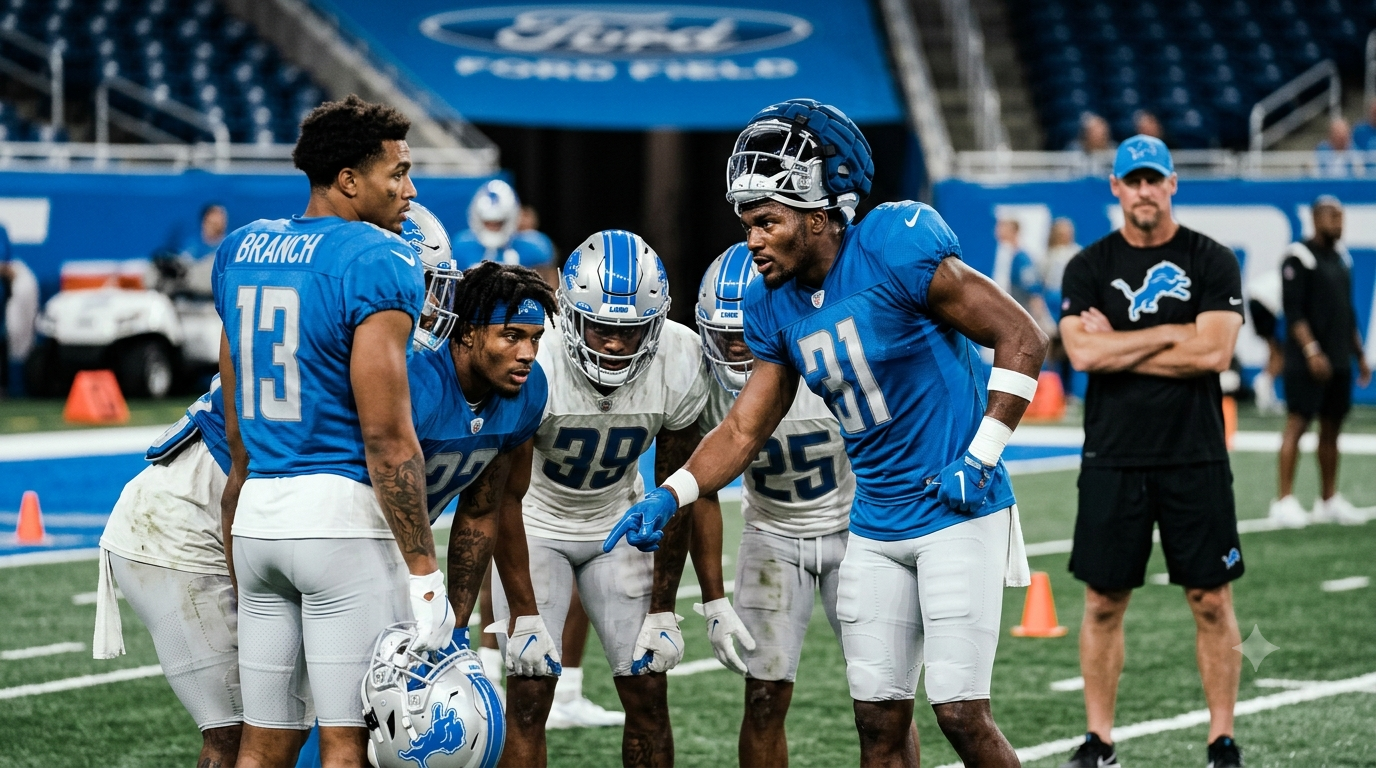
Kerby Joseph Is Quietly Becoming the Leader This Defense Needed
Kerby Joseph Is Quietly Becoming the Leader This Defense Needed
Every NFL team talks about leadership.
Very few know when it actually begins.
Fans often assume leadership arrives after a player earns a Pro Bowl selection.
Or signs a lucrative contract.
Or wears the captain’s patch.
Sometimes that’s true.
More often, leadership begins in moments that never make national headlines.
A conversation after practice.
A correction during a drill.
An extra film session with a younger teammate.
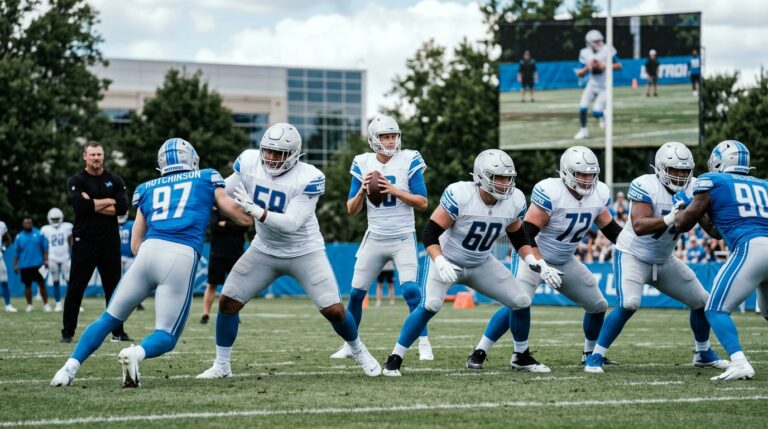
That’s why one of the most interesting stories from Detroit Lions training camp isn’t about an interception, a roster battle, or even a scheme adjustment.
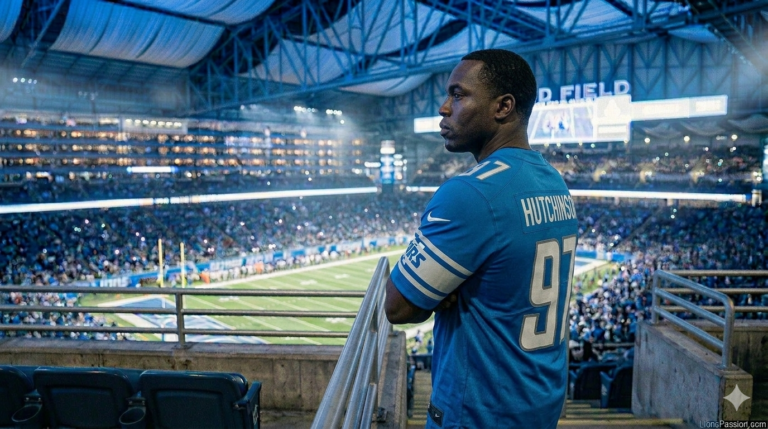
It’s about Kerby Joseph.
The All-Pro safety has reportedly taken Illinois defensive back Juice Clarke under his wing during camp, offering guidance that extends well beyond technique.
On the surface, it feels like a feel-good offseason story.
Look a little deeper, and it reveals something much more important.
The Lions’ culture is beginning to reproduce itself.
And that may be one of the clearest signs that Brad Holmes and Dan Campbell have built something sustainable.
Every Great Defense Eventually Learns to Teach Itself
The best defenses in the NFL don’t depend entirely on coaches.
They depend on players who become extensions of those coaches.
Think about the great defenses throughout league history.
They all had veterans who enforced standards inside the locker room.
Players who corrected mistakes before a coach needed to.
Players who helped rookies understand not just the playbook, but the expectations that came with wearing the uniform.
That’s the stage every championship organization eventually hopes to reach.
The Lions appear closer than they’ve ever been.
Kerby Joseph isn’t simply making plays anymore.
He’s helping shape the next generation of players expected to make them.
That’s a very different responsibility.
Leadership Is Earned Long Before It’s Recognized
One of the easiest mistakes fans make is believing leadership is appointed.
It isn’t.
It’s observed.
Teammates decide who they trust.
Who they listen to.
Who consistently prepares the right way.
Who responds after adversity.
Joseph has earned that respect the hard way.
His rise wasn’t built on reputation.
It was built on production.
Preparation.
Consistency.
Those qualities naturally attract younger players looking for guidance.
Juice Clarke isn’t just learning how to play safety.
He’s learning how to prepare like someone who has already succeeded at the highest level.
That’s knowledge coaches simply can’t replicate.
This Is Exactly What Dan Campbell Wanted
When Dan Campbell first arrived in Detroit, he rarely spoke about statistics.
He talked about accountability.
Toughness.
Trust.
Competition.
Many people interpreted those ideas as motivational slogans.
Years later, they look more like a blueprint.
Campbell never wanted a roster filled only with talented athletes.
He wanted players who could eventually carry the culture themselves.
That’s what makes Joseph’s mentorship so significant.
It’s evidence that the coaching staff no longer has to initiate every lesson.
Veteran players are beginning to pass those standards to younger teammates.
That’s how successful organizations maintain consistency from one season to the next.
We’ve explored before why Detroit continues to prioritize trust over simply collecting star power.
Read More:
Why the Lions Keep Choosing Trust Over Star Power
Joseph’s growth into a mentor feels like another chapter in that same philosophy.
Why This Matters More Than an Interception
Training camp always creates exciting highlights.
An acrobatic catch.
A forced fumble.
A long touchdown.
Those plays dominate social media because they’re easy to celebrate.
Mentorship rarely trends.
But if you asked most NFL coaches which matters more over the course of a 17-game season, many would choose the second answer.
Why?
Because good habits spread.
So do bad ones.
When respected veterans demonstrate professionalism every day, younger players begin adopting those routines without being told.
Film study becomes normal.
Attention to detail becomes expected.
Accountability becomes part of the environment instead of something coaches constantly enforce.
That’s how culture becomes self-sustaining.
And that’s exactly what appears to be happening inside Detroit’s secondary.
The Secondary Is Becoming One of Detroit’s Greatest Strengths
Kerby Joseph’s leadership isn’t developing in isolation.
It’s happening inside a position group that continues to evolve.
Brian Branch has established himself as one of the NFL’s most versatile defensive backs.
Christian Izien’s return adds depth and competition.
Young defensive backs continue fighting for roster spots.
Every practice creates another opportunity to raise the standard.
Leadership accelerates that process.
Instead of every lesson beginning with a whistle from the coaching staff, many now begin with conversations between players.
That’s a subtle change.
It’s also one of the strongest indicators that a defense is maturing.
Championship units don’t rely solely on coaches to maintain standards.
They hold themselves accountable.
Detroit appears to be moving closer to that reality every day.
Leadership Doesn’t Stop at One Position Group
Derrick Barnes’ growth shows how Detroit’s development philosophy extends beyond one position group.
One of the biggest misconceptions about football leadership is that it stays within a meeting room.
It doesn’t.
The habits that begin in one position group eventually spread across an entire roster.
When linebackers see defensive backs communicating at a higher level, expectations rise.
When defensive linemen watch the secondary hold itself accountable after every rep, the standard becomes contagious.
That’s why mentorship matters.
It’s never just about two players.
It’s about changing the environment everyone walks into each morning.
The Lions have spent years trying to build that kind of culture.
Now they’re beginning to see the results.
Brian Branch and Kerby Joseph Are Setting the Tone
Every great defense eventually develops players who become its identity.
For Detroit, that identity is beginning to take shape in the secondary.
Brian Branch has earned a reputation as one of the league’s most versatile defensive backs because of his instincts, toughness, and willingness to do whatever the defense requires.
Kerby Joseph brings something equally valuable.
Consistency.
Preparation.
Communication.
Those qualities don’t always appear on highlight reels.
They become obvious inside meeting rooms and on practice fields.
Together, Branch and Joseph give Detroit more than talent.
Detroit’s defensive identity has been evolving throughout training camp.
They give the defense stability.
Young defensive backs entering this room aren’t simply learning assignments.
They’re learning expectations.
That’s a significant difference.
The Best Coaches Eventually Become Unnecessary
That statement sounds strange at first.
No coach ever becomes unnecessary.
But the best coaches create environments where players begin correcting one another before the whistle blows.
That’s the real objective.
When veterans reinforce standards every day, coaches spend less time policing effort and more time refining technique.
Dan Campbell has always talked about building a player-led culture.
Not because coaches become less important.
Because players become more responsible.
Kerby Joseph mentoring younger teammates is another sign that vision is becoming reality.
The standards no longer belong only to Campbell.
They’re becoming the players’ standards too.
Brad Holmes Didn’t Just Draft Talent
It’s easy to judge a general manager by draft picks.
How many Pro Bowl players?
How many starters?
How many contracts worked out?
Those questions matter.
But Brad Holmes appears to evaluate players through another lens as well.
Can this player strengthen the culture?
Can he compete?
Can he accept coaching?
Can he eventually lead?
That’s a much harder quality to identify.
It’s also one of the reasons Detroit’s roster feels so different than it did just a few years ago.
The Lions haven’t simply accumulated talented athletes.
They’ve accumulated people capable of teaching other players how to succeed.
We’ve seen that philosophy appear throughout the organization.
Brad Holmes has spent years assembling a roster capable of sustaining success—not just reaching it.
The Lions Have Reached the Moment Brad Holmes Has Been Preparing For
Joseph’s growth into a mentor is another return on that investment.
Why Championship Cultures Become Self-Sustaining
Every successful organization eventually reaches the same crossroads.
Can the culture survive without constant reminders?
Early in a rebuild, coaches establish every expectation.
Veteran leaders are scarce.
Young players need direction.
Over time, that equation changes.
The locker room begins policing itself.
Standards become habits.
Habits become traditions.
Traditions become identity.
That’s how sustained winners stay competitive even as rosters evolve.
Detroit isn’t fully there yet.
But moments like Joseph mentoring Juice Clarke suggest the Lions are moving closer.
The coaching staff planted the foundation.
Now the players are beginning to build on it.
This Matters Long After Training Camp Ends
The easiest mistake fans can make is viewing this as a training camp story.
It isn’t.
Training camp simply revealed it.
Leadership developed in August shows up in October.
Trust built during practice appears on third down in December.
Relationships formed between veterans and rookies often influence careers for years.
That’s why organizations celebrate these moments even when they never appear in the box score.
The impact is delayed.
But it’s real.
One day Juice Clarke may become the veteran helping another young defensive back adjust to life in the NFL.
When that happens, the cycle continues.
That’s how culture outlives individual players.
Final Thoughts
Kerby Joseph’s greatest contribution to the Lions may never be measured by interceptions.
Leadership may be more valuable than another turnover.
It may never appear on an All-Pro ballot.
It won’t be reflected in fantasy football rankings.
Instead, it may be found in something much harder to quantify.
Influence.
The ability to help younger players become professionals.
The willingness to reinforce standards when coaches aren’t speaking.
The consistency to earn trust from teammates long before being asked to lead them.
Those qualities don’t always dominate headlines.
They often define championship organizations.
Dan Campbell and Brad Holmes have spent years trying to build a roster capable of sustaining success instead of chasing it.
Campbell recently explained why habits—not hype—will determine Detroit’s season.
That requires more than talent.
It requires leaders.
If the first week of training camp is any indication, Kerby Joseph is becoming exactly that.
And if his influence continues growing, the biggest impact he makes this season may not be the passes he intercepts.
It may be the confidence, preparation, and accountability he helps create in everyone around him.
For a defense with championship aspirations, that kind of leadership is every bit as valuable as another turnover.
What Do You Think?
Do you believe player-led leadership is one of the biggest reasons successful NFL teams stay competitive year after year?
And which current Lions player do you think is most likely to become the next great locker-room leader after Kerby Joseph?
Share your thoughts in the comments below—we’d love to hear your perspective.