The Lions Believe Their Best Players Haven’t Reached Their Ceiling Yet
One of the easiest mistakes fans make during the offseason is assuming improvement only comes from new additions.
The Detroit Lions don’t appear to agree.
If recent headlines reveal anything, it’s that Detroit believes some of its biggest improvements are already inside the building.
That mindset has become one of the defining characteristics of the Brad Holmes era.
While much of the NFL spends every offseason searching for outside answers, the Lions consistently look inward first.
That’s not complacency.
It’s confidence.
And the reason for that confidence can be found throughout Detroit’s roster-building philosophy, which we’ve covered extensively in How Brad Holmes Is Building the Detroit Lions:
The Lions don’t simply acquire talent.
They develop it.
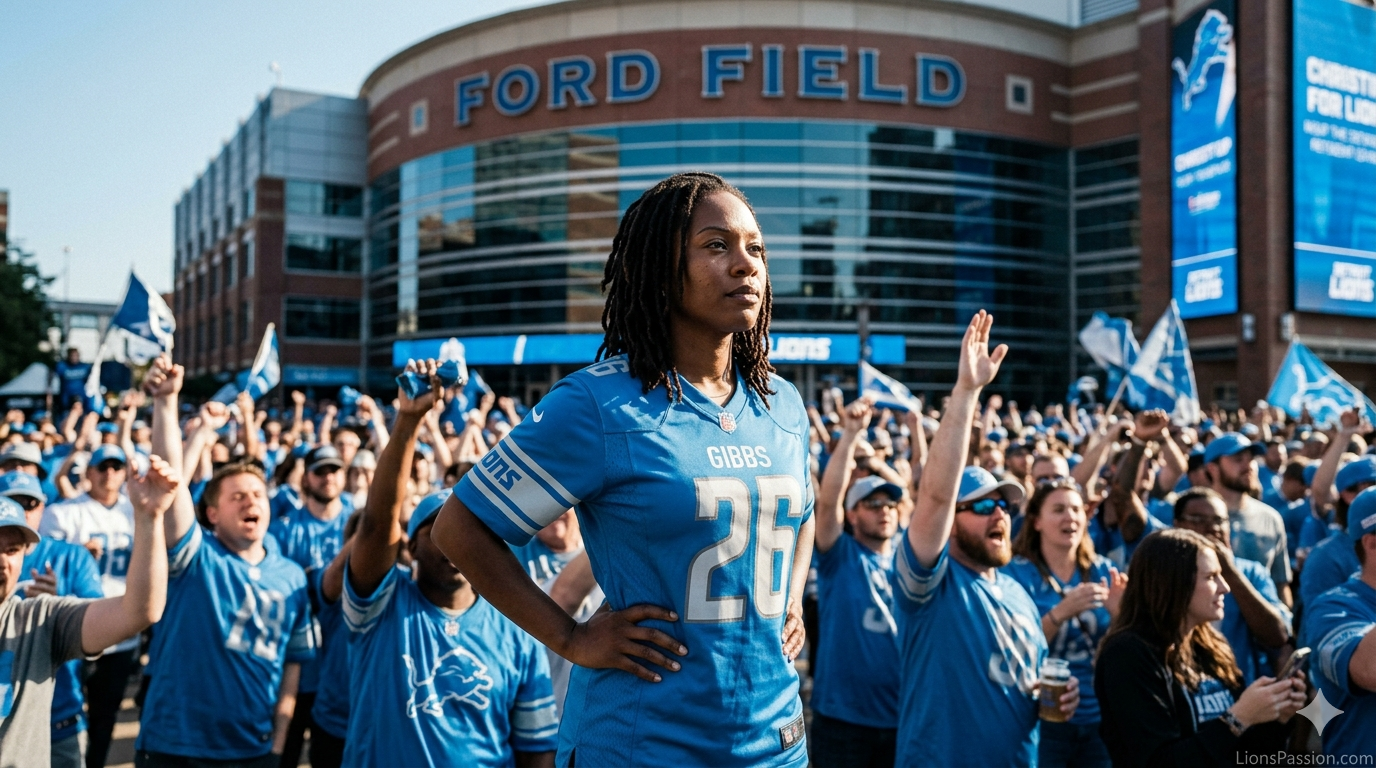
Jahmyr Gibbs Is Still Growing
Take Jahmyr Gibbs.
The discussion surrounding his MMA training isn’t really about mixed martial arts.
It’s about preparation.
Durability.
Balance.
Body control.
The ability to withstand the physical demands of an increasingly larger workload.
That’s important because Gibbs has already proven he can be explosive.
Nobody questions his talent anymore.
The conversation has shifted.
Now the question becomes:
How much responsibility can Detroit place on his shoulders?
The answer appears to be: more.
And that’s a scary thought for opposing defenses.
Because if Gibbs continues developing while handling additional touches, Detroit’s offense could become even more dangerous than it already was.
The Lions aren’t treating Gibbs like a finished product.
They’re treating him like a player whose best football may still be ahead of him.
That’s exactly the kind of long-term thinking explored in Detroit Lions Offensive Identity: Why Detroit Builds Through the Trenches:
The offense isn’t designed around isolated stars.
It’s designed around continuous growth.
Jimmy Rolder Represents Something Bigger
The same principle applies to Jimmy Rolder.
At first glance, headlines about a rookie linebacker earning a larger role might not seem significant.
But within Detroit’s organizational philosophy, it’s extremely important.
Because contenders survive through development.
Eventually, successful teams become expensive.
Stars receive extensions.
Veterans earn larger contracts.
Salary-cap flexibility becomes tighter.
The solution isn’t always another free-agent signing.
The solution is often finding the next contributor before you desperately need him.
That’s why Rolder matters.
Not because he’s guaranteed to become a star.
Because he’s evidence that Detroit’s development pipeline is still functioning.
Every young player who becomes a contributor helps sustain the contender window.
That’s how organizations avoid constantly rebuilding portions of the roster.
And it’s why Detroit’s entire draft-and-development approach has become one of the franchise’s greatest strengths.
Our full breakdown of that process can be found in Detroit Lions Draft Philosophy: How Detroit Values Picks, Positions, and Patience:
The Lions don’t just draft players.
They draft future solutions.
Why Internal Growth Matters More Than Ever
This is where many offseason conversations become misleading.
Fans naturally focus on additions.
Who signed?
Who left?
Who was drafted?
But championship organizations often ask a different question.
Who is about to improve?
That question may be more important than any free-agent acquisition.
If Gibbs takes another leap, the offense improves.
If Rolder becomes a contributor, the defense improves.
If young offensive linemen develop, the offense improves.
If second- and third-year players grow into larger roles, the roster improves.
Notice what’s missing?
External dependence.
The Lions aren’t acting like a team searching desperately for answers.
They’re acting like a team that believes many of those answers already exist.
That belief isn’t accidental.
It’s been earned through years of successful development.
Why Brad Holmes Keeps Betting on Development
One of the reasons Holmes has been so successful is his willingness to trust the process.
Many front offices panic.
Detroit typically doesn’t.
The Lions identify traits.
Develop players.
Create opportunities.
And allow growth to happen over time.
That approach requires patience.
It also requires conviction.
Because not every player develops immediately.
Not every draft pick becomes productive right away.
Not every contributor arrives on schedule.
But over the long run, the organizations that consistently develop talent tend to remain competitive longer than those that rely heavily on outside acquisitions.
That philosophy is reflected throughout Detroit Lions Roster Construction Timeline, which shows how Detroit gradually built its current contender window:
The roster wasn’t assembled overnight.
And it won’t be sustained overnight either.
The Culture Advantage Shows Up Here Too
Development isn’t only about coaching.
It’s about environment.
Players improve faster when expectations are clear.
When leadership is stable.
When accountability exists.
When teammates buy into the same standards.
That’s where Detroit’s culture becomes such a powerful competitive advantage.
The Lions have created an environment where development is expected.
Not hoped for.
Expected.
That distinction matters.
Because organizations that expect growth tend to create more of it.
Which is exactly why Why Culture Became the Lions’ Competitive Advantage remains one of the most important pieces of understanding Detroit’s rise:
The culture doesn’t replace talent.
It accelerates it.
The Most Important Question of the Offseason
Fans often ask:
Who did the Lions sign?
But perhaps the more important question is:
Who is about to take the next step?
That question may ultimately define Detroit’s season.
Because contenders don’t sustain success simply by adding talent.
They sustain success by continuously developing it.
The Lions appear to understand that.
And today’s headlines suggest they believe several important leaps are coming.
From Gibbs.
From young defenders.
From recent draft picks.
From players who haven’t yet reached their ceiling.
That’s a dangerous thought for the rest of the NFC North.
Final Thought
The most encouraging thing about Detroit’s offseason may not be who they added.
It may be who they believe is about to improve.
The Lions aren’t behaving like a team searching for answers.
They’re behaving like a team that believes many of those answers are already in the locker room.
And if they’re right?
The rest of the conference may discover that Detroit’s biggest offseason additions never actually arrived from outside the building.
They were already there.
Continue Reading
- How Brad Holmes Is Building the Detroit Lions
- Detroit Lions Draft Philosophy: How Detroit Values Picks, Positions, and Patience
- Detroit Lions Offensive Identity: Why Detroit Builds Through the Trenches
- Detroit Lions Roster Construction Timeline
- Why Culture Became the Lions’ Competitive Advantage