The Lions’ Deepest Position Battle May End With Good Players Getting Cut
The Lions’ Deepest Position Battle May End With Good Players Getting Cut
The hardest roster decisions in the NFL usually tell you something important.
Not about the players being cut.
About the team making the cuts.
Weak rosters don’t agonize over the bottom of the depth chart.
They spend training camp trying to find enough players who belong on an NFL field.
Strong rosters face a very different challenge.
They have to decide which capable players they simply don’t have room to keep.
That’s where the Detroit Lions appear to be entering training camp.
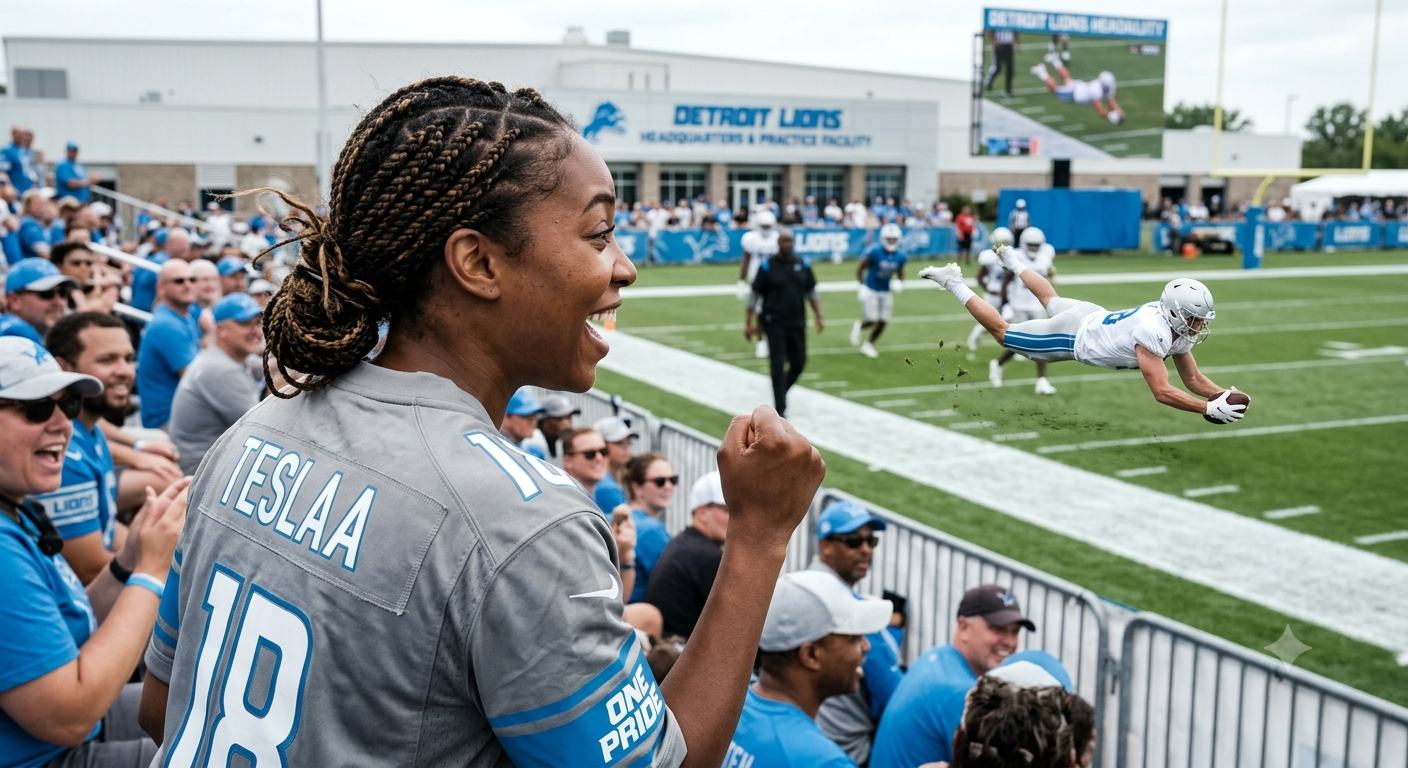
Over the past several practices, wide receivers like Dominic Lovett and Greg Dortch have continued drawing praise for their consistency, versatility, and ability to capitalize on opportunities. At the same time, rookie Isaac TeSlaa is experiencing the normal learning curve that comes with transitioning to NFL football.
Individually, those stories are interesting.
Collectively, they tell a much bigger story.
The Lions’ wide receiver room has become one of the most competitive position groups on the roster, and that competition says as much about Brad Holmes’ rebuild as it does about any individual player.
This isn’t simply a battle to determine WR5 or WR6.
It’s evidence that Detroit has reached a point where legitimate NFL talent may not survive final roster cuts.
For a franchise that spent years searching for enough playmakers, that’s a remarkable transformation.
A Few Years Ago, This Conversation Didn’t Exist
It wasn’t long ago that the Lions entered training camp hoping someone—anyone—would emerge as a reliable contributor.
Depth wasn’t a luxury.
It was a weakness.
If a player had NFL-caliber traits, chances were good he would make the roster because there simply weren’t enough alternatives.
Today’s receiver room feels completely different.
Amon-Ra St. Brown remains one of the league’s premier playmakers.
Jameson Williams continues to expand his role within the offense.
Veteran additions have strengthened the group.
Young receivers are pushing established players instead of merely filling practice reps.
That evolution didn’t happen by accident.
It happened because Brad Holmes committed himself to building layers of competition instead of relying on a handful of stars.
Dominic Lovett Is Making the Coaches Notice
Training camp often produces one or two players who quietly force their way into the conversation.
Dominic Lovett appears to be becoming one of them.
He hasn’t generated the loudest headlines.
He hasn’t produced the viral highlight that dominates social media.
Instead, he’s doing something coaches usually appreciate even more.
He’s stacking quality practices.
Reliable route running.
Consistent execution.
Professional attention to detail.
Those habits earn trust.
And trust is often far more valuable than one spectacular catch during an August practice.
Every productive day creates another difficult question for the coaching staff.
If Lovett keeps producing, where do the additional opportunities come from?
Who loses snaps?
Which receiver begins feeling pressure?
Those are healthy questions for a contender to have.
Greg Dortch Understands How NFL Rosters Are Built
Greg Dortch’s camp has followed a different path.
While receivers often become known for one specific strength, Dortch continues finding ways to help the team in multiple areas.
He’s contributed offensively.
He’s made plays on special teams.
He’s demonstrated the kind of versatility coaches value when constructing the final third of the roster.
That’s important because the battle for the final receiver spots rarely comes down to receiving statistics alone.
The players who survive those decisions are usually the ones who create value in as many situations as possible.
Can they play multiple receiver positions?
Can they contribute in the kicking game?
Can they execute assignments without mental mistakes?
Versatility doesn’t simply increase playing time.
It increases roster value.
That’s one reason Dortch continues attracting attention throughout camp.
Isaac TeSlaa’s Story Shouldn’t Be Rushed
Every rookie arrives carrying expectations.
Those expectations become even larger when every practice is analyzed in real time.
Isaac TeSlaa has experienced an uneven start to training camp.
Dan Campbell acknowledged as much.
That shouldn’t be confused with disappointment.
Rookie receivers often face one of the steepest learning curves in professional football.
The challenge extends well beyond catching passes.
Learning route adjustments.
Recognizing defensive leverage.
Building timing with the quarterback.
Understanding situational football.
Contributing as a blocker.
Mastering multiple alignments.
That’s an enormous amount of information to process in a matter of weeks.
The coaching staff isn’t looking for perfection.
It’s looking for progress.
Campbell has consistently shown patience with young players willing to learn from mistakes.
The real evaluation isn’t whether TeSlaa has struggled at times.
It’s whether he’s responding the right way.
Competition Is Exactly What Brad Holmes Wanted
When Brad Holmes took over the Lions, one of his biggest challenges wasn’t identifying starters.
It was creating meaningful competition behind them.
Championship organizations don’t improve because starting jobs are guaranteed.
They improve because every player understands someone is working to take his place.
That’s where Detroit now finds itself.
The receiver room isn’t being shaped by reputation.
It isn’t being shaped by draft position.
It’s being shaped by performance.
Every route.
Every special teams rep.
Every situational drill.
Every opportunity to earn another snap.
That’s the environment Holmes has spent years trying to build.
And judging by the first week of training camp, it’s finally becoming one of the Lions’ greatest competitive advantages.
Dan Campbell Wants More Than Production
When fans evaluate wide receivers, the conversation usually starts with catches.
How many receptions?
How many touchdowns?
How many explosive plays?
Inside an NFL building, the conversation sounds very different.
Can this receiver line up at multiple positions?
Can he adjust his route when the quarterback changes the play?
Does he block with the same intensity he catches the football?
Can the coaching staff trust him in two-minute situations?
Those questions often decide careers.
Dan Campbell has never hidden what he values.
Physicality.
Accountability.
Consistency.
Trust.
Those qualities don’t always appear in the box score.
They almost always appear on the final roster.
Special Teams Changes Everything
One of the biggest misconceptions about roster construction is believing the final receiver spots are determined strictly by offensive production.
They’re not.
For receivers battling for the fifth or sixth position, special teams often become the deciding factor.
Can the player contribute as a gunner?
Can he cover kicks?
Can he return punts?
Can he execute assignments that rarely generate headlines but consistently influence field position?
That’s where players like Greg Dortch become especially valuable.
His ability to contribute in multiple phases gives the coaching staff additional flexibility.
Versatility isn’t simply a bonus.
It’s roster insurance.
And Brad Holmes has spent years collecting players who make difficult roster decisions even more difficult.
Dominic Lovett Is Making Coaches Ask Better Questions
Dominic Lovett’s strong camp shouldn’t automatically be viewed as proof that he’s making the roster.
Instead, it should be viewed as proof that he’s forcing coaches to think harder.
That’s exactly what successful organizations want.
Every strong practice raises another question.
If Lovett keeps producing, who loses opportunities?
If Dortch continues making plays on offense and special teams, how valuable does that become?
If TeSlaa continues developing, how patient should Detroit remain with a player whose long-term ceiling may still be very high?
Those aren’t problems.
They’re evidence of depth.
Early in a rebuild, coaches struggle to find enough contributors.
Late in a rebuild, they struggle to choose between them.
Detroit has clearly entered the second category.
Brad Holmes Built Competition Instead of Comfort
One of Brad Holmes’ greatest accomplishments isn’t simply drafting talented players.
It’s creating an environment where very few jobs feel guaranteed.
That wasn’t always true.
Only a few years ago, many roster decisions felt obvious before camp even began.
Today, players understand that every practice matters.
Every special teams rep matters.
Every mental mistake matters.
Competition has become part of the culture.
We’ve already seen that philosophy appear across multiple position groups.
Veterans are challenged.
Young players receive opportunities.
Draft status earns attention.
Execution earns trust.
We’ve explored how Holmes consistently builds depth before the regular season ever exposes potential weaknesses.
Read More:
Why the Devin White Signing Tells Us More About Brad Holmes Than Devin White
The receiver room is simply another example of that larger philosophy.
Good Teams Cut Good Players
That sentence sounds strange.
But it’s one of the clearest indicators of organizational health.
Weak rosters rarely face painful decisions.
Championship-caliber rosters almost always do.
Every August, successful teams release players who eventually contribute somewhere else in the league.
Not because those players failed.
Because there simply weren’t enough roster spots.
Detroit appears to be approaching that reality.
Whether it’s Dominic Lovett, Greg Dortch, Isaac TeSlaa, or another receiver entirely, someone capable of helping an NFL team may ultimately find himself on the outside looking in.
Years ago, that would have been viewed as a problem.
Today, it should be viewed as progress.
Why This Competition Makes the Entire Offense Better
Even the receivers who don’t make the final roster influence the team’s success.
How?
By forcing everyone around them to improve.
A veteran can’t afford to coast when a younger player continues making plays.
A rookie can’t rely on draft position when experienced contributors are competing for the same role.
Every quality practice raises the standard for everyone else.
That’s exactly what Dan Campbell has spent years trying to create.
Competition without resentment.
Urgency without panic.
Accountability without excuses.
Those qualities make training camp harder.
They also make teams better.
Final Thoughts
The easiest story to write this week would have been about Dominic Lovett catching passes.
Or Greg Dortch making another impressive play.
Or Isaac TeSlaa’s uneven start.
Those stories matter.
But they all point toward something larger.
The Lions have finally reached a point where good football players aren’t guaranteed jobs.
That’s a remarkable transformation for a franchise that spent years searching for enough talent to compete.
Today, Detroit has something entirely different.
Depth.
Competition.
Difficult decisions.
Those aren’t signs of uncertainty.
They’re signs of organizational strength.
Brad Holmes has built a roster capable of forcing coaches to make uncomfortable choices.
Dan Campbell has created a culture where every player understands those choices will be earned through performance rather than reputation.
That’s exactly what championship organizations look like.
And if the receiver competition continues the way it has through the first week of training camp, the toughest decision facing the Lions may not be who deserves a roster spot.
It may be deciding which talented player they simply don’t have room to keep.
What Do You Think?
Which Lions receiver has impressed you the most during training camp so far?
Do you believe Dominic Lovett, Greg Dortch, or another player has done enough to force his way onto the 53-man roster?
Share your thoughts in the comments below and tell us which receiver battle you’ll be watching most closely as preseason games begin.