The Lions’ Offseason Still Has One Message: Protect the Structure
The Noise Says Change — The Lions Say Stability
Every NFL offseason creates the same illusion.
Movement feels like progress.
New names create excitement.
Big contracts signal urgency.
Aggressive teams dominate headlines.
And when a contender doesn’t follow that pattern, the reaction is almost automatic:
Why aren’t they doing more?
The Detroit Lions have found themselves in that exact conversation this offseason.
Between free agency rumors, depth chart projections, and draft speculation, the outside world keeps asking the same question.
Are the Lions being too quiet?
But if you look closely at the actual moves — and more importantly, the types of moves Detroit is being linked to — a very different picture emerges.
The Lions aren’t being passive.
They’re being precise.
Every rumor, every target, every quote from inside the building points to one consistent message:
Detroit’s offseason isn’t about changing the roster.
It’s about protecting the structure.
What “Structure” Actually Means in Detroit
The word structure gets thrown around loosely in sports conversations, but in Detroit’s case, it has a very specific meaning.
Structure is:
The offensive line that allows the system to function.
The culture that holds the locker room together.
The positional depth that absorbs injuries without collapse.
The draft pipeline that keeps talent flowing into the roster.
It’s not one player.
It’s the framework that allows every player to succeed.
And once a team builds that framework — once it finally works — the goal shifts.
You don’t rebuild it.
You protect it. Brad Holmes roster strategy
Why the Left Tackle Conversation Matters More Than It Sounds
One of the more telling signals from today’s headlines wasn’t a signing.
It was a comment.
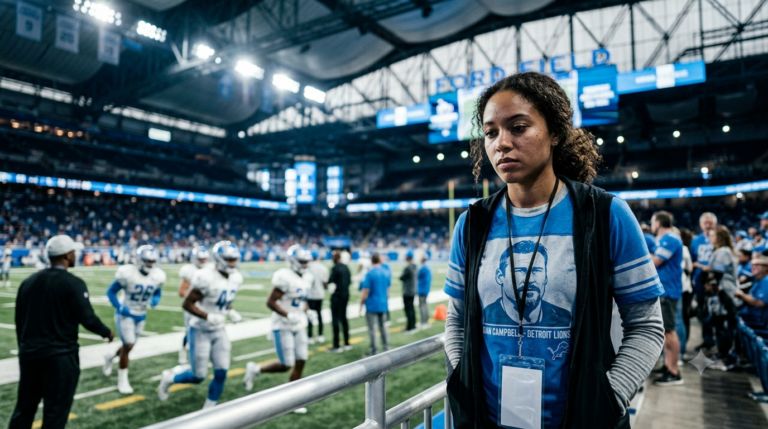
Dan Campbell openly acknowledged that even with Taylor Decker, the Lions still need to find another left tackle who can contribute.
At first glance, that might feel like overkill.
Decker has been a stabilizing presence. The offensive line remains one of the strengths of the team.
So why revisit the position?
Because Detroit understands something many teams learn the hard way:
The offensive line isn’t a position group.
It’s the foundation of the entire system.
If that foundation cracks — even slightly — everything else becomes less reliable.
The run game loses consistency.
The quarterback faces more pressure.
The timing of the offense begins to erode.
Finding another capable left tackle isn’t about replacing Decker.
It’s about ensuring the structure holds if anything changes.
That’s not panic.
That’s protection.
Hendon Hooker and the Value of Internal Stability
Another storyline from today’s inputs centers around Hendon Hooker and his public confidence in Dan Campbell.
That might seem like a cultural footnote.
It’s not.
Quarterback rooms are fragile environments. Even backup roles can influence stability depending on how players respond to their place within the system.
Hooker’s confidence in Campbell signals something deeper.
Trust. why culture became Detroit’s edge
That trust is part of Detroit’s structure.
When players believe in the system, the system holds under pressure.
When they don’t, fractures appear quickly.
The Lions don’t just evaluate quarterbacks based on physical ability.
They evaluate how those players fit into the broader ecosystem of the team.
Because even the QB2 role isn’t just about depth.
It’s about stability.
The Pass Rush Question Is About January, Not September
Another recurring theme in today’s news cycle is Detroit being linked to pass rushers.
A $10 million edge defender here.
A speculative signing there.
At surface level, it feels like the Lions are still searching for defensive answers.
But that interpretation misses the context.
Detroit isn’t trying to build a pass rush.
They’re trying to protect it.
In the regular season, a strong defensive front can carry games.
In the playoffs, depth determines survival.
Rotations tighten. Fatigue builds. Opponents adjust.
The teams that can maintain pressure deep into January are the ones that advance.
Adding another pass rusher isn’t about fixing a weakness.
It’s about preventing one from appearing later. Detroit’s defensive identity
The Wide Receiver Rumors Follow the Same Pattern
The same logic applies to the Lions being loosely connected to wide receiver options following league-wide movement.
Detroit doesn’t lack offensive weapons.
The core is already established.
So why even explore the position?
Because offensive efficiency depends on continuity.
If one piece goes down, the system needs to continue functioning without disruption.
That requires depth that fits the system, not just talent that looks good on paper.
Again, the theme isn’t addition.
It’s protection.
Why the Draft Still Matters in This Phase
Mel Kiper linking Detroit to a massive Alabama offensive lineman might feel like standard draft speculation.
But it fits perfectly within the Lions’ broader philosophy.
Even after free agency, Detroit continues to invest attention in the trenches.
Why?
Because draft development is how structure survives.
Veterans age. Contracts expire. Injuries happen.
The draft ensures that when those moments arrive, replacements are already developing within the system.
Detroit doesn’t wait for problems to appear.
They prepare for them years in advance.
That’s why the same positions keep appearing in projections.
It’s not redundancy.
It’s reinforcement. Detroit’s draft philosophy
The Difference Between Building and Maintaining
There’s a critical shift happening in Detroit right now that not every fan fully recognizes.
Detroit’s roster construction timeline
The Lions are no longer building a contender.
They’re maintaining one.
That distinction changes everything.
When you’re building, you chase talent.
When you’re maintaining, you protect alignment.
The front office has to think differently.
Every move must:
Fit the cap structure
Fit the locker room culture
Fit the long-term roster timeline
Because one misaligned decision can ripple across the entire system.
Detroit’s offseason behavior reflects a front office that understands that responsibility. Detroit’s offensive identity
Why the League Is Watching Closely
The Lions’ approach hasn’t gone unnoticed.
Across the league, teams are studying how Detroit transitioned from rebuilding to contending without losing structural stability.
The blueprint is becoming clearer:
Draft aggressively
Develop internally
Spend carefully
Protect the culture
Reinforce the trenches
It’s not flashy.
But it’s repeatable.
And in a league defined by volatility, repeatability is one of the most valuable advantages a franchise can have.
Final Thought
The Lions’ offseason doesn’t look dramatic.
It doesn’t dominate headlines.
It doesn’t create the same excitement as teams making aggressive moves across the league.
But that’s exactly the point.
Detroit isn’t trying to win March.
They’re trying to control January.
And every move — from left tackle depth to quarterback stability to pass rush reinforcement — points to the same underlying truth:
The Lions believe their structure is already strong.
Now they’re making sure it stays that way.
If you want Lions coverage that goes deeper than rumors and actually explains how Detroit is protecting its contender window, explore the full LionsPassion strategy hub:
-
How Brad Holmes Is Building the Detroit Lions
-
Detroit Lions Draft Philosophy
-
Detroit Lions Offensive Identity
-
Detroit Lions Defensive Identity
Because the real story of the Lions isn’t just who they add next.
It’s how every move protects the structure they’ve already built.
If you want, I can also write the full article body for “The Lions’ Offseason Still Has One Message: Protect the Structure” in LionsPassion voice.