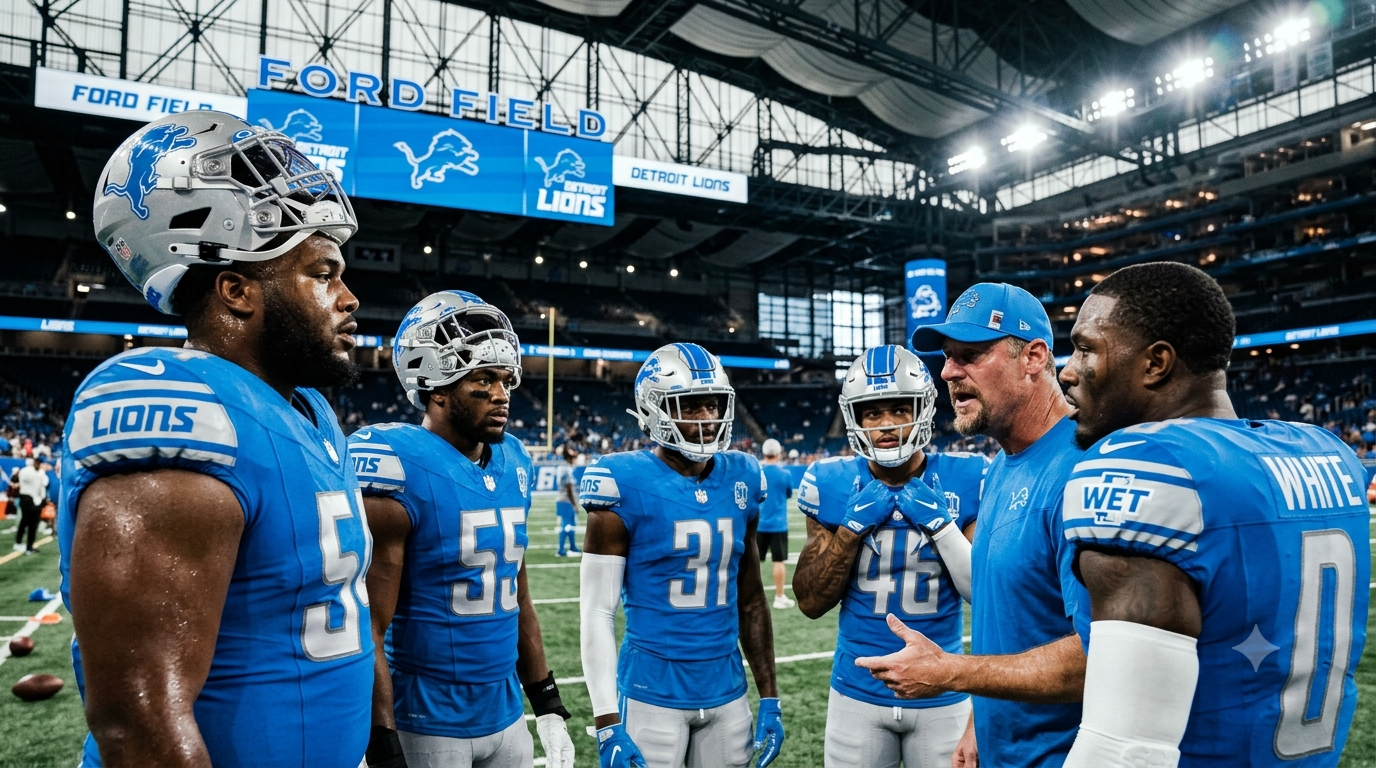
The Lions’ Defense Is Starting to Look Exactly How Dan Campbell Imagined It
The Lions’ Defense Is Starting to Look Exactly How Dan Campbell Imagined It
There comes a point in every rebuild when the conversation changes.
At first, you’re talking about draft picks.
Then you’re talking about free agents.
Eventually, you’re talking about whether the roster has enough talent to compete.
But contenders reach a different stage entirely.
They stop asking whether they have enough stars.
They start asking whether they have enough answers.
That feels like the stage the Detroit Lions have finally reached.
Look at the headlines coming out of Allen Park over the past few days.
Alim McNeill is progressing toward full strength.
Christian Izien is back on the practice field.
Devin White has joined the linebacker room after Jimmy Rolder’s injury scare.
Derrick Barnes continues earning more responsibility.
Kerby Joseph is mentoring younger defensive backs instead of simply worrying about his own role.
Individually, those stories don’t seem connected.
Together, they reveal something much bigger.
The Lions’ defense isn’t simply becoming healthier.
It’s becoming deeper.
And there is an important difference between those two things.
Health Gets You Through September. Depth Gets You Through January.
Every NFL team hopes to stay healthy.
No team actually does.
The season is too long.
The game is too violent.
Eventually, every contender loses players.
Championship teams aren’t defined by avoiding adversity.
They’re defined by surviving it.
That’s why Brad Holmes has spent years constructing this roster the way he has.
Fans sometimes questioned why Detroit kept investing in developmental players.
Why another linebacker?
Why another defensive back?
Why continue adding competition when there were already established starters?
Because Holmes wasn’t building a roster for opening day.
He was building one for the moments nobody could predict.
Injuries.
Unexpected opportunities.
Long playoff runs.
Those are the moments when depth stops being a luxury and becomes a necessity.
We’re beginning to see that philosophy come into focus.
Every Positive Update Tells the Same Story
Training camp often produces dozens of individual headlines.
Most disappear within twenty-four hours.
This week feels different because nearly every encouraging report points in the same direction.
Alim McNeill’s recovery means Detroit could regain one of the anchors of its defensive front sooner than expected.
Christian Izien’s return strengthens the secondary.
Jimmy Rolder avoiding a serious injury preserves valuable depth at linebacker.
The addition of Devin White provides veteran experience while creating more competition inside the room.
None of those developments guarantee success.
But collectively, they reduce uncertainty.
And uncertainty is one of the biggest enemies of championship football.
The Lions don’t need every player to become an All-Pro.
They need enough capable players that one injury doesn’t force the entire defense to change its identity.
That’s exactly what they’re beginning to build.
Brad Holmes Didn’t Build This Defense Around One Star
One of the easiest ways to misunderstand Detroit’s roster is to assume it’s built around individual names.
Yes, Aidan Hutchinson changes games.
Yes, Brian Branch has become one of the most versatile defensive backs in football.
Yes, Kerby Joseph has developed into one of the league’s premier safeties.
But Holmes has never acted like one superstar was enough.
His approach has always suggested something different.
Build layers.
Create competition.
Develop replacements before you desperately need them.
That’s why Detroit has consistently invested in coaching as much as personnel.
It’s why players aren’t expected to master every responsibility the moment they arrive.
Instead, the Lions expand roles as players prove they can handle them.
We’ve seen that philosophy play out repeatedly.
Read More:
Why the Lions Keep Choosing Trust Over Star Power
The Lions aren’t chasing headlines.
They’re building reliability.
And reliability is what keeps championship aspirations alive long after the excitement of September fades.
The Difference Between Talent and Depth
Talent wins highlights.
Depth wins seasons.
That’s the lesson every contender eventually learns.
It’s also why today’s training camp reports deserve more attention than they might normally receive.
When Alim McNeill gets healthier, Detroit doesn’t simply improve one position.
The entire defensive front rotates more effectively.
When Christian Izien returns, the secondary gains another experienced option capable of handling meaningful snaps.
When Devin White arrives, the linebacker room becomes more competitive overnight.
When Jimmy Rolder avoids a long-term injury, another developmental piece remains part of the future.
Those are not isolated stories.
They’re pieces of the same puzzle.
And for perhaps the first time under Dan Campbell, you can step back, look at the entire defensive roster, and see something that’s been years in the making.
Not just a defense with stars.
A defense with answers.
Leadership Is Becoming Detroit’s Competitive Advantage
Talent can win individual games.
Leadership is what helps teams survive an NFL season.
That’s another reason the Lions’ defense feels different entering 2026.
Kerby Joseph has already established himself as one of the league’s premier safeties because of what he does on Sundays.
But one of the more interesting stories coming out of camp has nothing to do with interceptions or pass breakups.
It’s about mentorship.
Joseph has been spending time with younger defensive backs, including former Illinois standout Juice Clarke, passing along the habits, communication, and preparation required to succeed at the professional level.
That may seem like a small detail in July.
It won’t feel small in December.
Championship organizations don’t simply develop players.
They develop teachers.
Every time an established veteran helps accelerate the growth of a younger teammate, the organization becomes stronger than it was the day before.
That’s how successful cultures sustain themselves.
Not through speeches.
Through daily examples.
Derrick Barnes Represents Something Bigger
We’ve already explored Derrick Barnes’ expanding role earlier this week, but his development belongs in this conversation too.
Barnes isn’t just becoming a better linebacker.
He’s becoming another example of Brad Holmes’ long-term philosophy paying dividends.
The easiest way to build a defense is to keep buying answers.
The harder way is to develop them.
Detroit has consistently chosen the harder path.
Instead of replacing every player who needed refinement, the Lions invested in coaching, patience, and competition.
Now Barnes appears ready to reward that investment.
Read More:
The Lions’ Defense Might Finally Have the Missing Piece It Needed
His growth also creates flexibility for Kelvin Sheppard.
A linebacker who can stay on the field against both the run and the pass allows the defense to disguise intentions more effectively.
Every coordinator wants uncertainty working in his favor.
Barnes helps create it.
Dan Campbell May Have Given Away the Bigger Story
One of the more revealing comments from training camp came when Dan Campbell referenced what could become the defense’s “game-changing element.”
Coaches don’t often reveal exactly what excites them.
Campbell didn’t need to identify one specific player for the message to become clear.
The excitement isn’t rooted in one star.
It’s rooted in what the unit is becoming.
A healthy Alim McNeill changes the interior.
An ascending Derrick Barnes changes the second level.
Kerby Joseph’s leadership strengthens the back end.
Brian Branch continues to provide versatility.
Veteran additions create insurance.
Young players continue pushing for roles.
Those pieces don’t simply improve individual position groups.
They begin connecting into a complete defense.
That’s a very different conversation than Detroit was having just a few seasons ago.
The Difference Between Good and Great Defenses
Most NFL defenses have talented starters.
The best defenses have answers.
When a starter misses time, someone steps in.
When an offense attacks a weakness, another player adjusts.
When the game changes in the fourth quarter, the defense still has fresh contributors ready to make winning plays.
That’s what depth provides.
Not headlines.
Solutions.
The Lions appear much closer to that reality than they have been at any point under Campbell.
Will there still be challenges?
Of course.
Every contender deals with injuries, unexpected performances, and difficult matchups.
But Detroit no longer feels like a defense that depends on a handful of stars carrying the entire load.
It feels like a defense built to survive the inevitable.
Why Brad Holmes Built It This Way
Brad Holmes has rarely chased the loudest offseason move.
Instead, he’s consistently invested in sustainable growth.
Draft picks.
Player development.
Competition.
Selective veteran additions.
Every move has pointed toward the same objective:
Build a roster capable of winning long after the opening month of the season.
That’s why the Devin White signing makes sense in context.
It’s not necessarily about replacing anyone.
It’s about ensuring the linebacker room has experience, competition, and flexibility.
The same logic applies to the continued development of younger defenders.
The Lions aren’t asking one player to rescue the defense.
They’re asking every player to strengthen it.
We’ve seen that philosophy throughout the roster.
Read More:
The Lions Have Reached the Moment Brad Holmes Has Been Preparing For
Depth isn’t glamorous.
But it wins games in November.
This Defense Is Starting to Look Complete
There’s still plenty of work ahead.
Training camp isn’t finished.
Preseason games haven’t begun.
The regular season remains weeks away.
No one should mistake optimism for certainty.
But optimism based on evidence is different from optimism based on hope.
Today’s evidence is encouraging.
Alim McNeill is progressing.
Christian Izien is back.
Jimmy Rolder appears to have avoided a major setback.
Veteran depth has been reinforced.
Young players continue developing.
Leaders are mentoring the next wave.
That’s not one positive headline.
That’s a pattern.
And patterns are often more predictive than isolated moments.
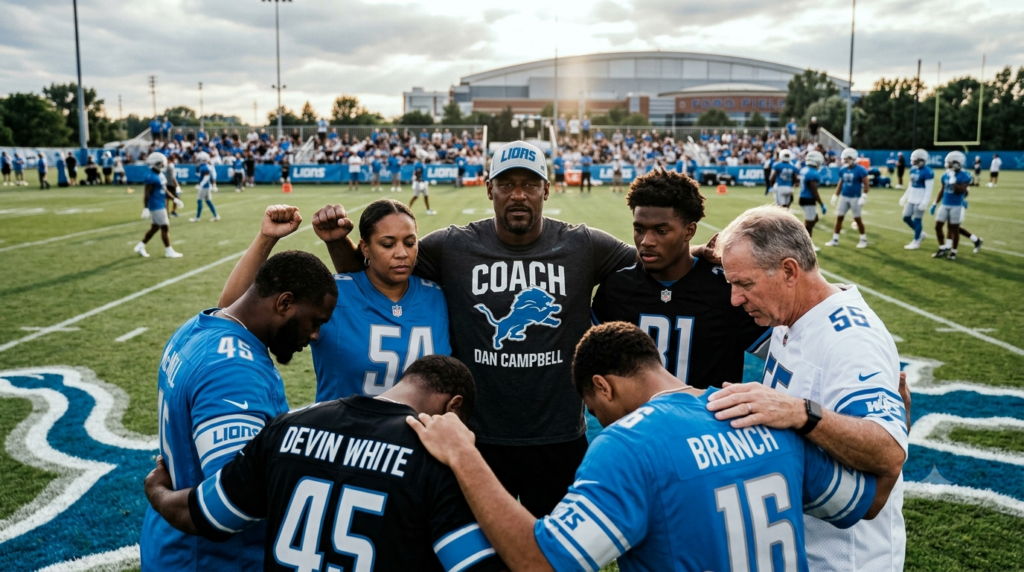
Final Thoughts
The easiest way to cover training camp is to treat every update as a separate story.
One injury report.
One signing.
One interception.
One encouraging quote.
The more interesting approach is to step back and ask what those updates are building toward.
For the Lions, the answer is becoming clearer.
This defense isn’t simply getting healthier.
It isn’t simply adding players.
It’s becoming deeper.
Smarter.
More adaptable.
More connected.
That may be the most significant development of Detroit’s offseason.
Because championship defenses aren’t remembered for having the best highlights in July.
They’re remembered for having the fewest weaknesses in January.
The Lions aren’t there yet.
But for the first time in Dan Campbell’s tenure, you can begin to see exactly what he has been trying to build.
And that’s a much bigger story than any single practice.
What Do You Think?
Is this the deepest defense the Lions have had under Dan Campbell?
Or do you think Detroit still needs another addition before Week 1?
Share your thoughts in the comments below and tell us which defender you’re most excited to watch as training camp continues.